Browse Items (510 total)
Sort by:

Crimean Tatar men pray inside the Istrim Cami mosque in Karasubazar.
19 October 1837
19 October 1837

Two "common Tatars" distribute alms to the poor as they exit the mosque. There is a mulla wearing a turban and a haji next to him - recognizable due to the white band. Among the mendicants there is a chapelet and another haji. According to Demidov,…
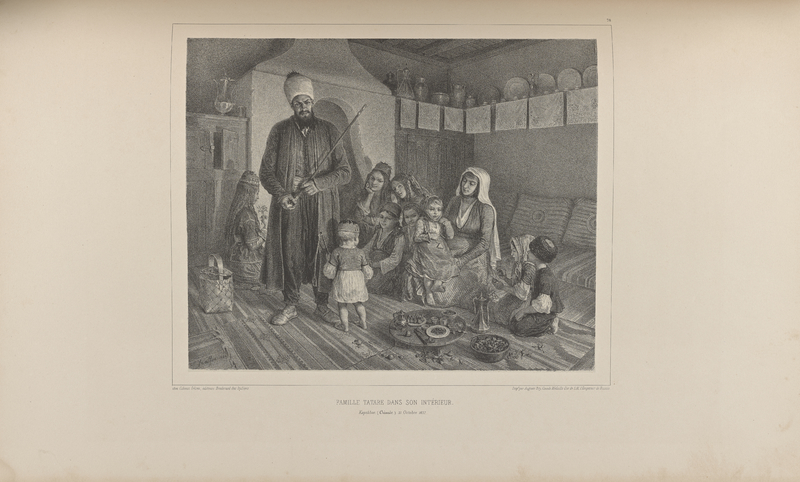
Interior view of a Tatar home near Kapsikhor. A large family is gathered around the father. Food and drink rest on the ground and on a low table. Small tapestries cover the floor. Plates, pitchers, and cloths are are displayed on a high shelf.
21…
21…

Tatar dervishes sit or stand in a circle at the Istrim Cami Mosque in Karasubazar.
18 October 1837
18 October 1837
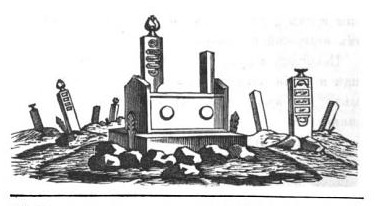
Keppen explains (page 45] that the Crimean Tatars marked grave sites with simple pillars. A chalma(turban) traditionally topped the grave of a man, while a flat shliapka(cap) often topped that of a woman's grave.